Apostille for Russian Documents | Russia Apostille Service for Use Abroad
Preparing Russian Paperwork for Procedures Overseas
Using Russian paperwork in another country can involve an extra authentication step. A certificate, diploma, notarial instrument, or other official record that works normally within Russia may need to be prepared differently once it becomes part of a foreign application.
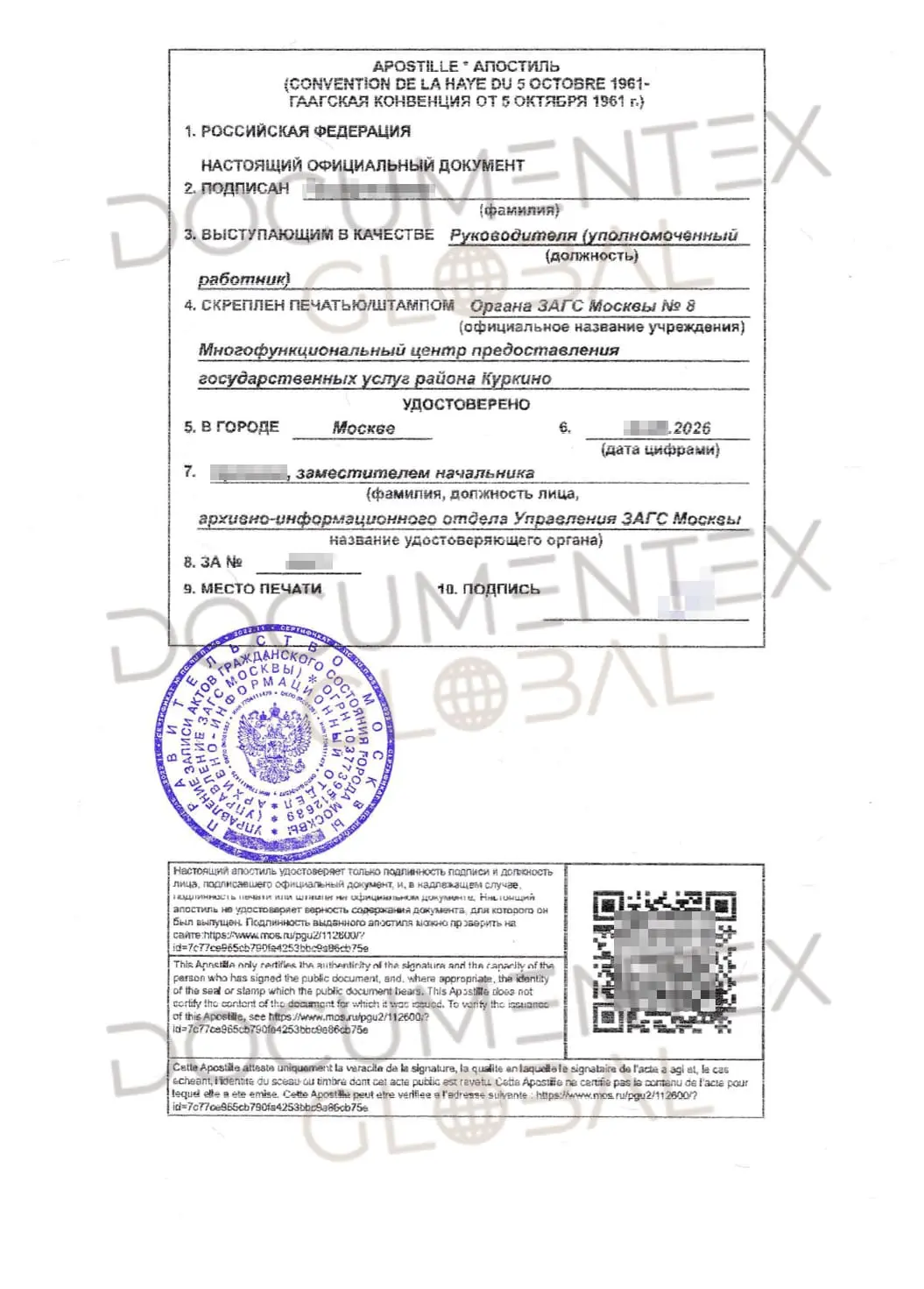
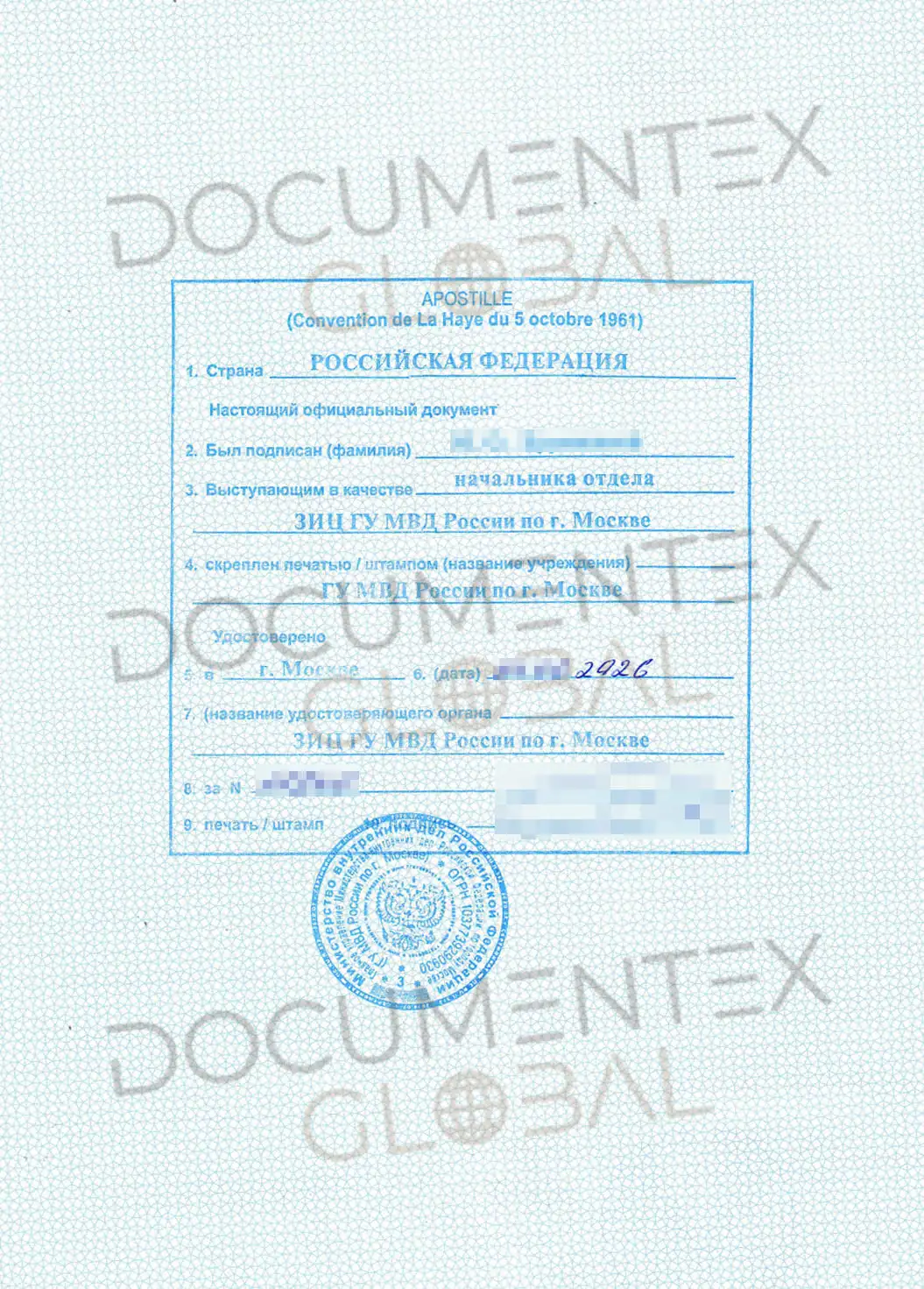
For destinations where the Apostille Convention is applicable, that preparation can involve obtaining an apostille. This provides a standardized way to authenticate the official origin of an eligible public document without following the traditional consular legalization route.
What the apostille covers is quite specific. It relates to the signature appearing on the document, the official capacity of the signer and, when relevant, the accompanying seal or stamp. The factual content written in the document is outside the scope of this certification.
The first question, therefore, is not simply whether the paperwork came from Russia. Its destination and the requirements of the organization that will receive it also need to be considered.
When Russian Paperwork Becomes Part of a Foreign Application
People request apostilles for many different reasons, but usually the document is only one part of a larger procedure abroad.
Russian records may be needed when someone is:
-
Relocating or dealing with residence formalities in another country;
-
Applying to a school, university, or other educational institution overseas;
-
Registering a marriage or completing a family-related procedure abroad;
-
Presenting qualifications for employment outside Russia;
-
Preparing paperwork connected with an overseas business matter;
-
Dealing with inheritance, a court case, or a notarial procedure in another jurisdiction.
Not every foreign institution asks for the same form of authentication. Before the Russian document enters the process, it is useful to establish what the receiving side actually expects.
Russian Records Commonly Prepared with an Apostille
The range of paperwork involved is fairly broad. Some records come from civil registration authorities, others from educational institutions, law-enforcement bodies, courts, or notaries.
Depending on the particular document, apostille processing may be relevant for:
-
Russian criminal record certificates;
-
Birth, marriage, divorce, and death certificates;
-
Diplomas, school certificates, academic supplements, and certain other educational records;
-
Notarial powers of attorney, declarations, consent forms, and certified copies;
-
Certain court records and other eligible public documents.
These categories should not be treated as if they all follow one administrative route. A diploma and a criminal record certificate, for example, can ultimately be required for the same immigration case abroad while still passing through different procedures in Russia.
Why the Type of Russian Document Changes the Apostille Procedure
With Russian paperwork, identifying the document correctly is an important first step.
A birth certificate does not originate from the same administrative system as a diploma. A police record is different again, as is a document executed before a notary. Those differences matter when determining how an apostille should be arranged.
We therefore look at the document itself: what category it belongs to, where it originated, who issued or certified it, and what form it is currently in. From there, the appropriate route can be established.
This also helps identify cases where something needs to happen before the apostille stage begins.
Where Is an Apostille Issued for Russian Documents?
There is no single Russian office through which every apostille application passes.
Responsibility is linked to the category and origin of the paperwork. Depending on the document involved, the relevant procedure can be handled within the justice system, education authorities, the Ministry of Internal Affairs, civil registration system, or another body authorized for that particular group of records.
For the applicant, the practical point is simple: the responsible office should be determined from the document rather than guessed from the reason it will be used overseas.
A review at the beginning can therefore prevent paperwork from being directed through an unsuitable processing route.
Does the Document Need Anything Before the Apostille Stage?
Sometimes a Russian document is already suitable for the next stage. Sometimes it is not.
Older certificates, certain educational records, notarized paperwork, or documents issued in a particular form may require attention before apostille processing can move forward. In other situations, obtaining a newly issued document may be the more appropriate route.
There is no benefit in adding an unnecessary preliminary step, so we check the existing document first. Its condition, format, origin, and certification details help show what actually needs to be done.
Remote Apostille Assistance for Documents from Russia
Living outside Russia does not necessarily mean that you need to return simply to deal with the apostille procedure.
We start with a review of the document you have. Once its category and origin are clear, we establish the relevant processing route and check whether preliminary preparation is necessary. The required stages can then be coordinated and followed through to completion.
This approach allows much of the practical work to be handled remotely, without requiring the document holder to personally navigate the responsible offices.
If further preparation is needed for the destination, we can also coordinate a notarized translation. International courier delivery of the completed original documents can be arranged after processing.
From a Russian Original to a Completed Apostille
Each case starts with the actual paperwork rather than with a fixed checklist. What happens next depends on the document and the route that applies to it.
Our assistance may involve:
-
Examining the Russian document in its current form;
-
Establishing its category and administrative origin;
-
Determining where the apostille procedure should take place;
-
Checking whether another step is needed beforehand;
-
Coordinating the document through the relevant processing stages;
-
Keeping track of progress during the procedure;
-
Arranging a notarized translation where appropriate;
-
Obtaining a newly issued document where this is necessary;
-
International courier delivery of the completed originals.
The aim is to keep these stages within one coordinated process: from understanding what needs to be done with the Russian document to completing the apostille and preparing the original for its intended destination.
About Us
Documentex Global is a professional service specializing in document assistance for people living abroad or going through immigration processes

Minimal Client Involvement

No Personal Presence Required

Save Time and Resources

Reliability and Trust

Worldwide Delivery

Trusted by Our Clients
How It Works
Request
Consultation
Payment
Processing
Document Verification
Delivery
* Delivery costs are covered by the client
FAQ